Designed and built solo, from design to code with AI
Argotek CRM & sales pipeline, built on their ERP
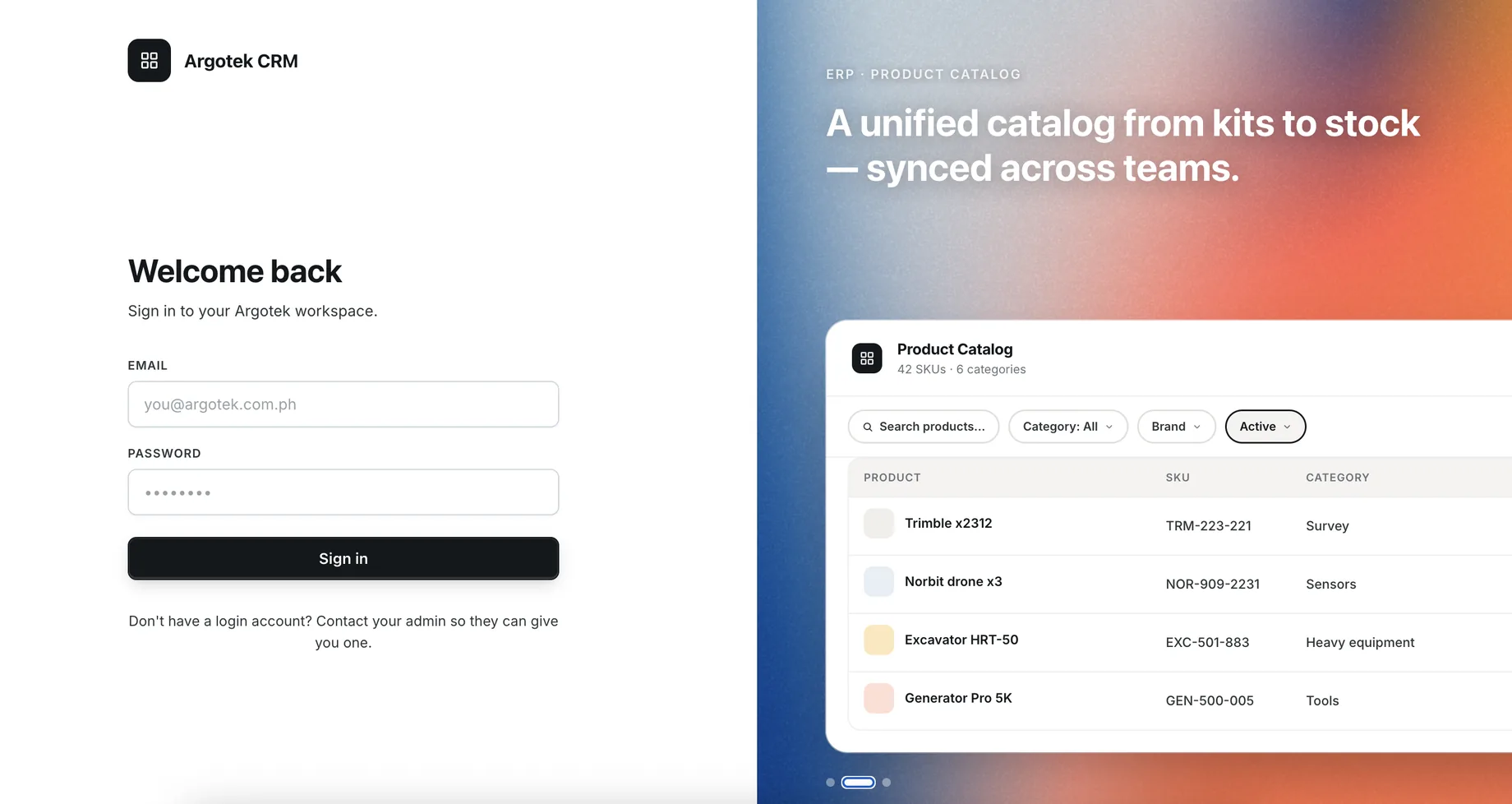
Overview
Argotek needed one place to run sales: a CRM and pipeline connected to their product catalog, instead of a stack of disconnected spreadsheets. I took it from concept to production solo: research, product thinking, UX, UI, and code were all mine, designed and built end to end with AI tooling.
One person, from first sketch to a working app the team uses, with no design-to-engineering hand-off.
The problem
Argotek ran its sales pipeline and product list in separate Excel files, with nothing connecting them. There was no single, current view of what was happening, so managers and the CEO couldn't get a quick read on the pipeline. Answering a basic question about deals or stock meant digging through spreadsheets and piecing it together by hand.
Understanding the work
Before designing anything, I gathered requirements by talking to every role that would touch the product: the CEO, sales managers, technical staff, and admins. Each needed something different: leadership wanted a fast read on the pipeline, sales needed to move deals, and the technical and admin teams needed product and customer data they could trust. Those conversations decided what to build, and what to leave out.
Two halves of one business, in sync
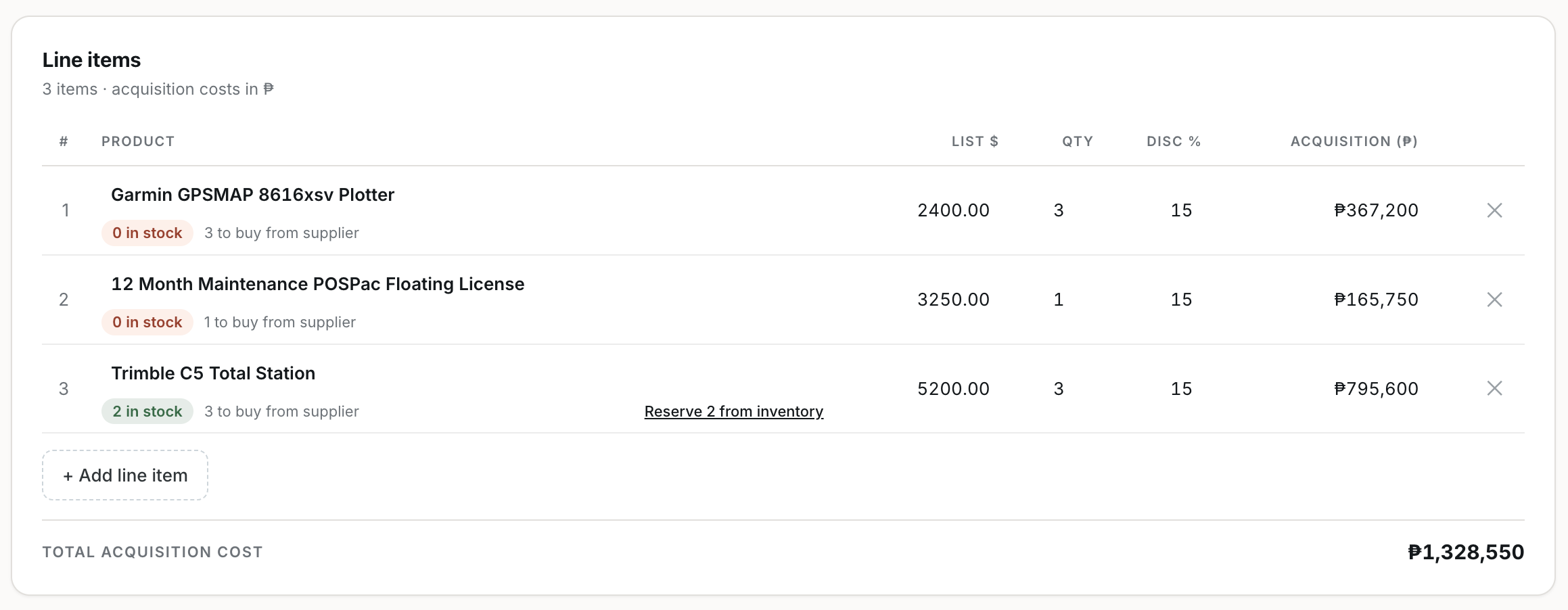
The CRM and sales pipeline are fused to Argotek's operations ERP, so a single record carries a customer from their first lead all the way to lifelong service. Two hubs carry the weight: the Deal P&L Engine prices every deal, and Inventory keeps stock and cost honest across both sides. Hover any module to see what it touches.
Hover any module to see what it connects to. Grey arrows are the flow inside each half; coral lines are the live sync that keeps sales and operations pointed at the same truth.
What I built
- A CRM with a single, reliable view of customers and accounts.
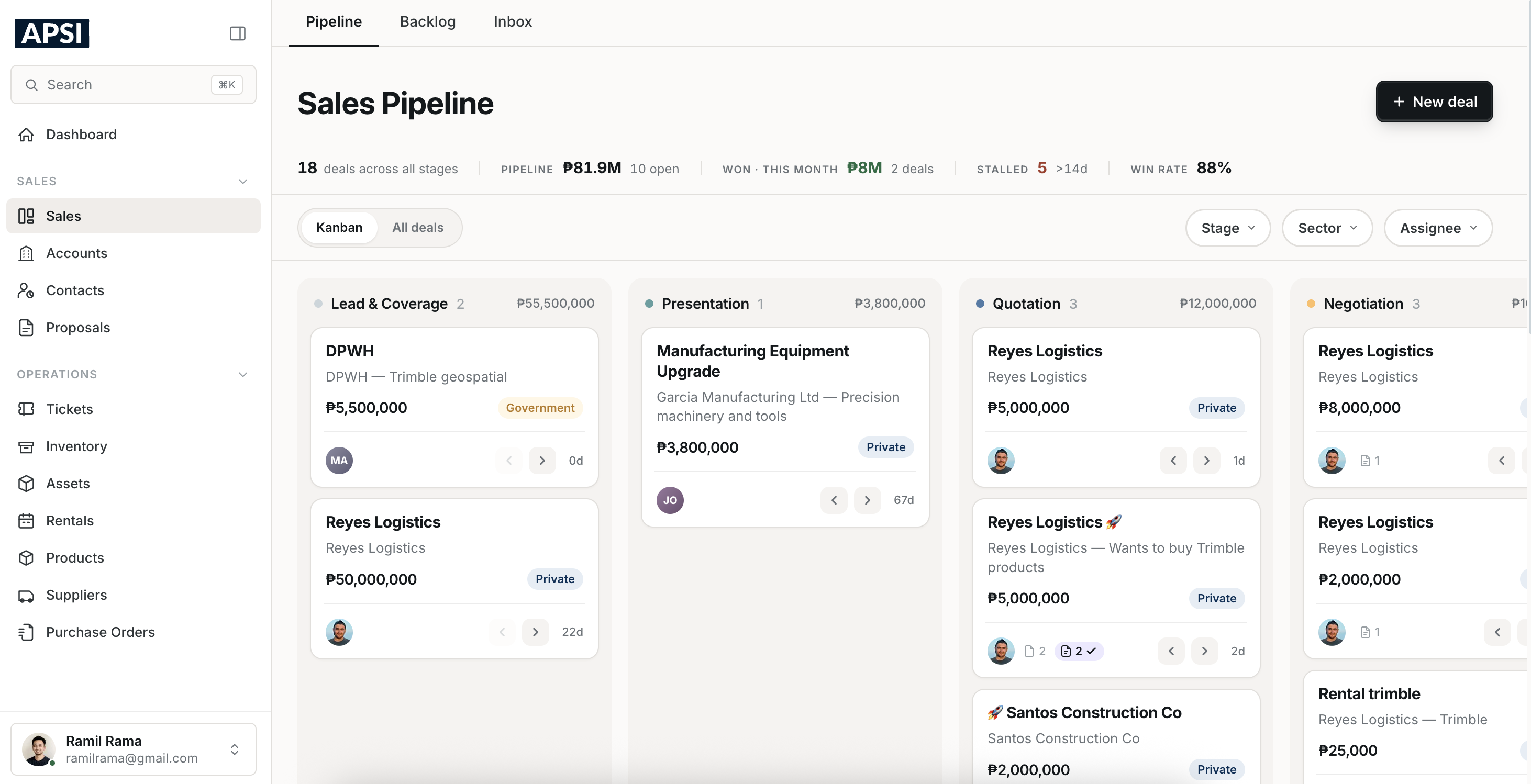
- A sales pipeline that makes deal stages, ownership, and next actions obvious at a glance, the quick overview managers and the CEO were missing.
- A unified product catalog that connects the product list to the pipeline, so everyone works from one source of truth instead of separate spreadsheets.
How I built it
There was no Figma hand-off and no translation loss between design and build. I designed and built directly with AI tooling, so the design intent carried all the way into production. Because I prototyped with the company's own data, I had a working demo fast, so the team could react to something real in days rather than sprints, and we iterated from there.
The result is a product shaped by the same person who understands the users, the design system, and the code, which kept it fast to build and coherent to use.
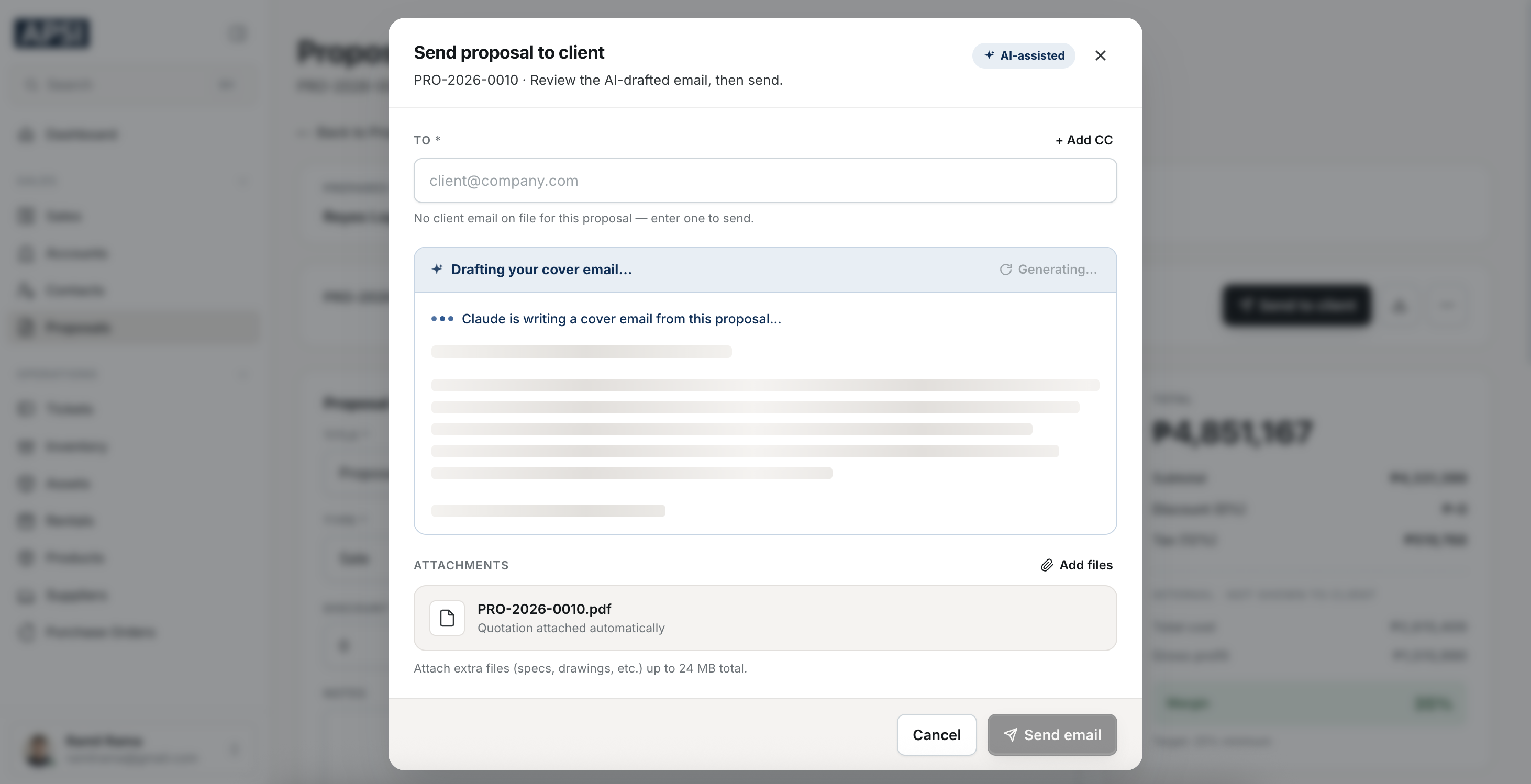
I'm happy to walk you through a working demo of the CRM, sales pipeline, and ERP sync. Email me and I'll set one up.
What changed
Built across both halves of the business, from leads and pipeline through to inventory, customer assets and service.
Research, product thinking, UX, UI and production code owned end to end, with no translation loss between design and build.
Prototyping against the company's own data put a real product in front of the team in days rather than sprints.
- One source of truth. Customers, deals, and the product catalog live in one app instead of disconnected spreadsheets.
- Leadership visibility. Managers and the CEO get a current read on the pipeline at a glance, without piecing it together by hand.
- Working software in days. Prototyping with the company's own data meant the team was reacting to a real product within days, not sprints.